
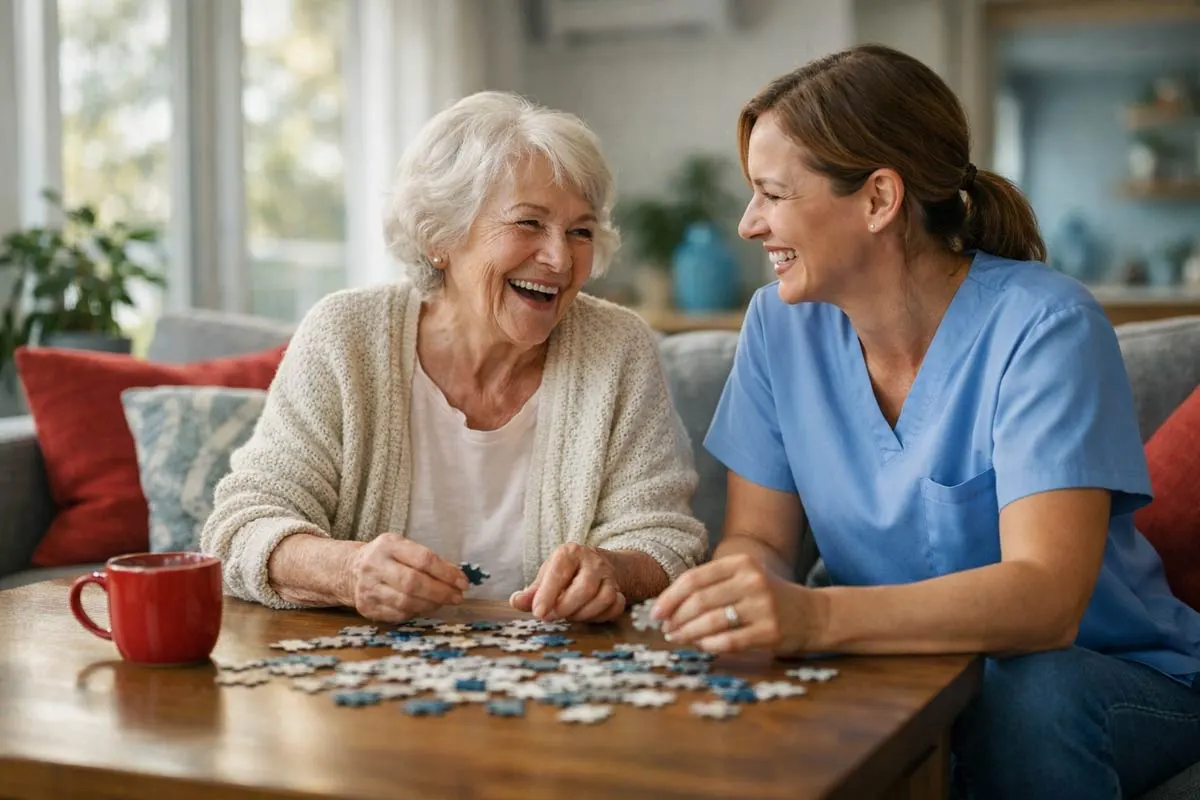
Caregiver and senior enjoying a puzzle activity at home
Table of contents
Show moreShow less- Why Activities Matter for Seniors
- How to Choose the Right Activities
- Physical Activities for Seniors at Home
- Cognitive and Brain-Boosting Activities
- Creative Activities That Inspire Joy
- Social and Emotional Engagement Activities
- Daily Living Activities with Purpose
- Technology-Based Activities for Seniors
- Tips for Caregivers to Keep Seniors Engaged
- Conclusion
- Frequently Asked Questions
Why Activities Matter for Seniors
When you think about aging, what usually comes to mind? Slowing down? Taking it easy? While rest is important, staying actively engaged is just as critical, if not more so. For seniors, especially those spending a lot of time at home, daily activities are not just about passing the time. They are essential for maintaining physical health, emotional stability, and cognitive sharpness.
Research shows that seniors who stay engaged in meaningful activities experience lower risks of depression, dementia, and chronic illnesses. In fact, even small daily interactions—just 15 to 30 minutes of activity—can significantly improve mood and overall well-being. Think of it like keeping a car engine running. If it sits idle too long, things start to break down. The same goes for the human mind and body.
Isolation is one of the biggest hidden threats to older adults. When seniors feel disconnected, it can trigger anxiety, memory decline, and even physical deterioration. That’s where caregivers step in—not just as helpers, but as companions, motivators, and facilitators of joy.
Activities create purpose. They give seniors something to look forward to. Whether it’s solving a puzzle, baking cookies, or simply sharing stories, these moments build connection and meaning. And here’s the truth: it’s not about doing something complex. It’s about doing something intentional.
For broader lifestyle guidance, explore senior wellness tips.
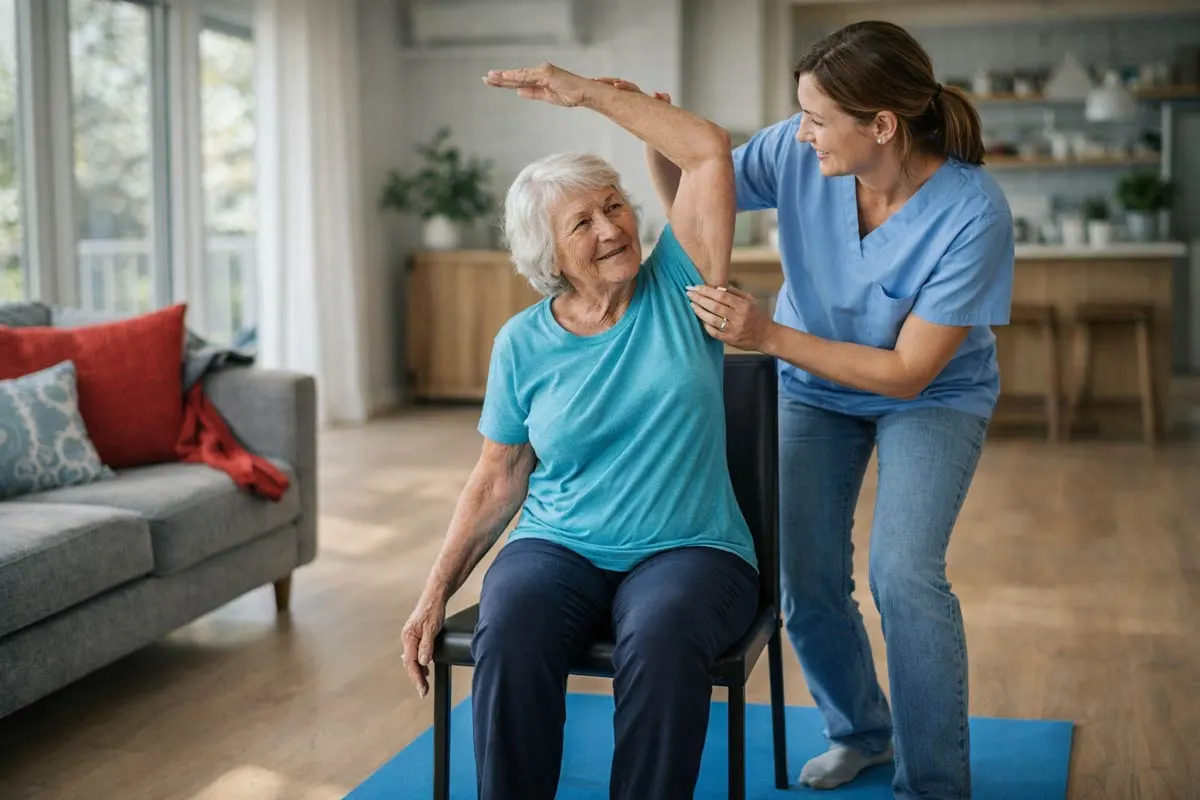
Senior doing chair yoga at home with caregiver assistance
How to Choose the Right Activities
Choosing the right activity isn’t about picking what sounds fun to you; it’s about choosing what works best for the senior you’re caring for. Every individual is different, and the key to engagement lies in personalization.
Start by assessing physical and cognitive ability. Can they move comfortably? Do they have memory challenges? Are they easily fatigued? These factors determine whether an activity will feel enjoyable or overwhelming. The goal is to challenge without frustrating.
Equally important is understanding personal interests. Did they love gardening in the past? Were they passionate about music? Activities that connect to past hobbies often spark deeper engagement because they tap into familiar memories and emotions.
Here’s a simple way to think about it:
| Factor | Why It Matters | Example |
|---|---|---|
| Ability Level | Prevents frustration or injury | Chair exercises instead of standing workouts |
| Interests | Boosts motivation and enjoyment | Cooking favorite recipes |
| Energy Levels | Maintains consistency | Short daily sessions instead of long ones |
| Social Needs | Reduces loneliness | Group or shared activities |
Caregivers should also remain flexible. Some days, seniors may feel energetic. Other days, they may prefer something quiet. Adapting in real time is what transforms an activity from a task into a positive experience.
Pairing activities with proper nutrition can further enhance results—see nutrition tips.
Physical Activities for Seniors at Home
Low-Impact Exercises
Physical movement is one of the most powerful tools for maintaining independence. You don’t need a gym or fancy equipment. Simple exercises done at home can significantly improve mobility, strength, and balance.
Walking around the house, gentle stretching, or chair yoga can make a huge difference. These activities help reduce the risk of falls, improve circulation, and boost energy levels. Even something as simple as standing up and sitting down repeatedly can strengthen leg muscles over time.
Think of the body like a machine: if it’s not used regularly, it stiffens. But when you keep it moving, even gently, it stays functional and resilient.
Indoor Movement Activities
Movement doesn’t have to feel like “exercise.” Turn it into something fun. Dancing to old favorite songs, light cleaning tasks, or even tossing a soft ball back and forth can get the body moving naturally.
According to the CDC, regular physical activity can improve sleep, reduce anxiety, and lower blood pressure in older adults. That’s a powerful return for such simple actions.
The secret? Make it enjoyable. If it feels like a chore, it won’t stick. But if it feels like play, it becomes part of daily life.
Also consider seasonal adjustments using this seasonal safety guide.
Cognitive and Brain-Boosting Activities
Puzzles and Games
Keeping the brain active is just as important as moving the body. Activities like crossword puzzles, Sudoku, and board games stimulate memory, attention, and problem-solving skills.
Recent studies even suggest that seniors who regularly play board games may have up to a 15% lower risk of dementia. It’s not just entertainment; it’s prevention.
Games also introduce a sense of challenge and accomplishment. Solving a puzzle triggers a reward response in the brain, making seniors feel capable and confident.
Memory and Storytelling Activities
One of the most underrated yet powerful activities is storytelling. Ask seniors about their past, including childhood memories, career experiences, or favorite moments. This not only stimulates memory but also reinforces identity and emotional connection.
You can enhance this by using photo albums or memory boxes. Each item becomes a doorway into conversation, laughter, and reflection.
These activities are especially beneficial for seniors experiencing cognitive decline. They create a safe space where memories are valued, not tested.
Creative Activities That Inspire Joy
Arts and Crafts
Creativity doesn’t fade with age; it evolves. Activities like painting, knitting, or crafting allow seniors to express themselves in ways that words sometimes cannot.
Art engages multiple areas of the brain simultaneously, improving coordination, focus, and emotional well-being. It’s like giving the brain a full workout without it feeling like work.
And here’s the best part: there’s no right or wrong. Every creation is meaningful.
Music and Dance
Music has a unique ability to unlock memories and emotions. Even seniors with advanced dementia often respond positively to familiar songs.
Whether it’s listening, singing, or gently dancing, music can improve mood, reduce stress, and create moments of joy. Research also shows music-based activities support both cognitive and emotional health.
Think of music as a bridge; it connects the past with the present in a way few other activities can.
Social and Emotional Engagement Activities
Conversation and Reminiscence
Never underestimate the power of a simple conversation. Talking, laughing, and sharing stories can dramatically improve emotional well-being.
Loneliness has been linked to increased risks of anxiety and depression in seniors. Regular interaction acts as a buffer against these effects.
Ask open-ended questions. Listen actively. Show genuine interest. These small actions create a sense of belonging and importance.
Virtual Social Interaction
Technology has opened new doors for connection. Video calls with family, virtual events, or online communities allow seniors to stay socially active without leaving home.
Even if technology feels intimidating at first, with guidance, it can become a powerful tool for reducing isolation and maintaining relationships.
Daily Living Activities with Purpose
Cooking and Baking Together
Cooking is more than just preparing food; it’s an experience. It engages the senses, triggers memories, and fosters collaboration.
Seniors often have cherished recipes tied to their past. Recreating these dishes can bring back powerful emotions and create meaningful moments.
Gardening and Nature-Based Activities
Gardening offers both physical and emotional benefits. Even small indoor plants can provide a sense of responsibility and accomplishment.
Caring for something living creates a connection to nature, which has been shown to improve mood and reduce stress.
You can find more ideas in this home activity guide.
Technology-Based Activities for Seniors
Digital Games and Apps
Technology isn’t just for younger generations. Many apps are designed specifically for seniors, offering brain games, memory exercises, and entertainment.
These tools can enhance cognitive function and provide structured engagement.
Video Calls and Online Learning
Encourage seniors to learn something new, whether it’s a language, a hobby, or a skill. Online platforms such as Rosetta Stone or Babbel make learning easier than ever. Learning stimulates the brain and creates a sense of achievement, no matter your age.
Tips for Caregivers to Keep Seniors Engaged
Keeping seniors engaged isn’t about doing more; it’s about doing things better and more intentionally.
- Keep activities simple and consistent
- Focus on enjoyment, not perfection
- Encourage participation without pressure
- Adapt based on mood and energy
- Celebrate small wins
The goal is not productivity. It’s connection, joy, and quality of life.
Conclusion
Engaging activities are not optional in senior care; they are essential. They support physical health, sharpen the mind, and nurture emotional well-being. Whether it’s a short walk, a shared laugh, or a creative project, these moments shape the daily experience of aging.
Caregivers have the unique opportunity to transform ordinary days into meaningful ones. And often, it’s the simplest activities that leave the biggest impact.
Frequently Asked Questions

At Supreme Homecare, our dedicated team of caregivers and home care professionals shares one goal: providing exceptional care at home. With experience, compassion, and skill, we support patients and families while continually training and educating our staff.
Our team members are more than employees. They are passionate advocates for health and well-being. By combining expertise with genuine kindness, we deliver care that makes a real difference.
Through the Supreme Homecare Blog, we share advice, stories, and insights to inspire and support caregivers and families. We are proud to lead the way in home care, and we are glad you are part of the Supreme Homecare family.
Have questions, concerns, or feedback? Contact us today. We would love to hear from you.