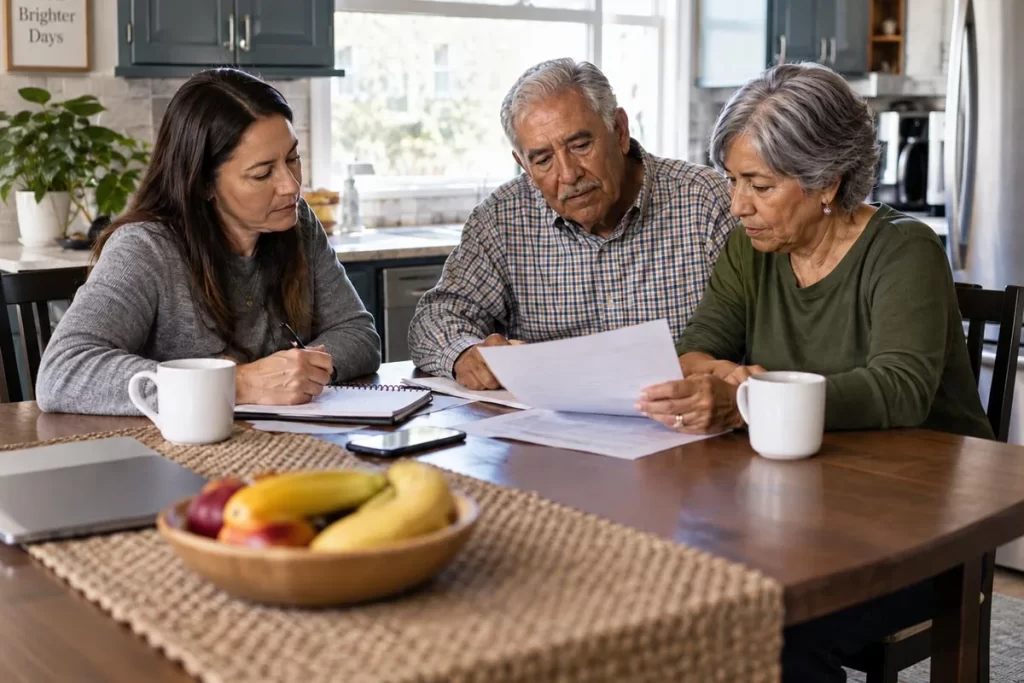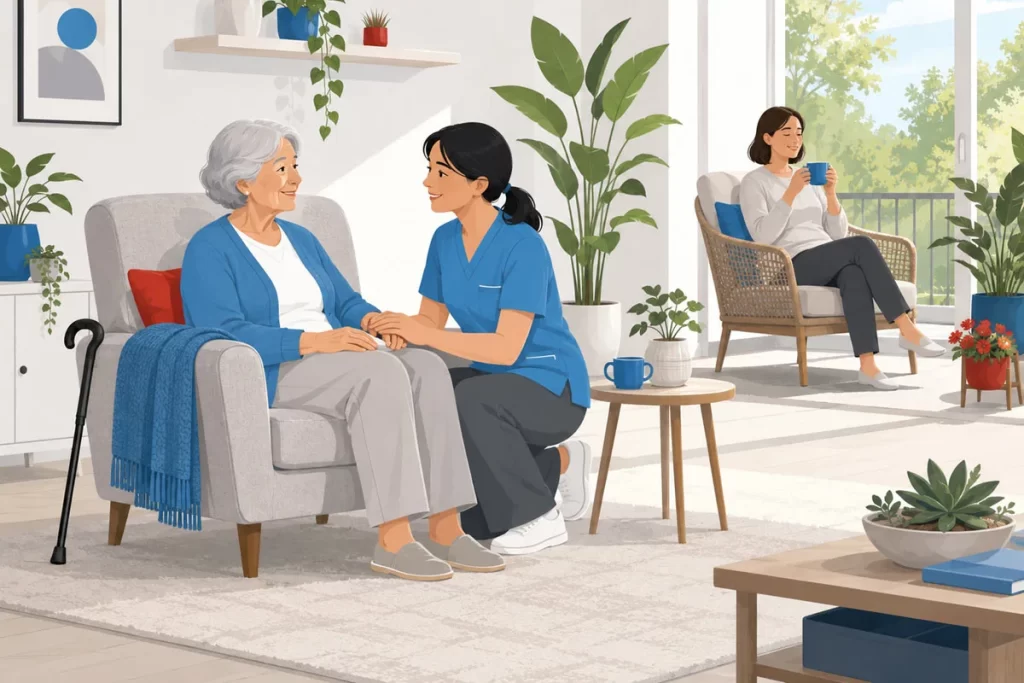

A thoughtful senior care plan helps families prepare for changing needs, daily support, healthcare, and long-term decisions.
Table of contents
Show moreShow less- Who Can Get Paid to Care for a Family Member in Pennsylvania?
- Pennsylvania Programs That Pay Family Caregivers
- Get Paid to Care for Someone You Love
- How Much Do Family Caregivers Get Paid in PA?
- How to Apply to Get Paid as a Family Caregiver in Pennsylvania
- What Services Can You Provide as a Paid Family Caregiver?
- Start Getting Paid to Care for a Family Member in Pennsylvania
- Frequently Asked Questions
Yes, you can get paid to care for a family member in Pennsylvania. Through programs such as Medicaid Community HealthChoices (CHC), eligible family members can receive hourly wages for helping a loved one with daily activities at home.
You may qualify if you care for an elderly parent, an adult family member with a disability, or someone who needs regular assistance with bathing, dressing, meals, or mobility.
You don't need a nursing degree to provide most nonmedical personal care services. However, your loved one must qualify for an approved program, and you must meet its caregiver requirements.
Below, we explain who qualifies, how much you can earn, and how to apply in Pennsylvania in 2026.
Who Can Get Paid to Care for a Family Member in Pennsylvania?
Pennsylvania allows eligible relatives to provide paid home care through certain state-supported programs.
Family members who may qualify include:
- Adult children caring for their parents
- Brothers and sisters
- Adult grandchildren
- Other eligible adult relatives
- Trusted friends or neighbors
Spouses, legal guardians, and inpiduals having certain legal decision-making roles are generally excluded from paid caregiving under Pennsylvania's CHC waiver. Other programs may have different rules.
The person receiving care must also qualify for services. For Medicaid-funded personal assistance, this usually involves meeting financial and functional eligibility requirements.
For example, if your mother has difficulty bathing, dressing, and moving safely around her home, she may qualify for assistance. If approved, you could become her paid caregiver instead of hiring an agency caregiver to provide those services.
Pennsylvania Programs That Pay Family Caregivers
Several programs help families cover the cost of in-home care. The right option depends on your loved one's age, disability, and financial circumstances.
1. Community HealthChoices (CHC)
Community HealthChoices is the primary Medicaid program to explore if you can be paid to care for an elderly parent in Pennsylvania.
CHC provides long-term services and supports to qualifying adults age 21 and older, including older adults and people with physical disabilities.
Through approved personal assistance services, eligible family members may help with bathing, dressing, meal preparation, mobility, and other daily needs.
Caregivers can work through a participating home care agency or an approved participant-directed arrangement.
An important distinction: Having Medicaid does not automatically mean someone qualifies for paid home care. The inpidual must also meet the requirements for long-term services and have an approved care plan.
2. OBRA Waiver
The OBRA Waiver supports qualifying adults with developmental physical disabilities, generally ages 18 to 59 when entering the program.
It provides approved home- and community-based services, which may include personal assistance from eligible relatives.
3. Act 150 Program
Act 150 helps Pennsylvania residents ages 18 to 59 with qualifying physical disabilities who need personal assistance but are financially ineligible for Medicaid.
Eligible participants may select qualified attendants, including certain family members. Depending on income, participants may be required to contribute toward the cost of their services.
4. Pennsylvania Caregiver Support Program
The Caregiver Support Program differs from Medicaid-funded caregiver employment.
Rather than providing regular wages, it helps qualifying family caregivers with approved expenses, respite services, and supplies.
Eligible caregivers may receive reimbursement of up to $600 per month for approved ongoing expenses, subject to program rules and income-based reimbursement percentages.
Families can learn more through the Pennsylvania Department of Aging.
Important: Pennsylvania's former Aging Waiver closed on December 31, 2019, when participants transitioned to Community HealthChoices. It is not a separate enrollment option in 2026.
Supreme Home Care
Get Paid to Care for Someone You Love
Already caring for a parent or family member? You may qualify to receive payment through Pennsylvania Medicaid. Supreme Home Care helps you understand your eligibility, navigate the paperwork, and get started as a paid family caregiver.
Licensed Pennsylvania home care agency • Medicaid application assistance • Weekly direct deposit
How Much Do Family Caregivers Get Paid in PA?
Family caregiver pay varies by program, employer, location, and number of authorized care hours.
In 2026, Pennsylvania increased funding for certain participant-directed caregivers. The Department of Human Services reported wage increases of approximately $1 to $5 per hour for impacted workers, bringing their pay closer to or above $15 per hour.
To understand how caregiver earnings work, consider these examples:
| Hourly Rate | Hours per Week | Average Monthly Pay |
|---|---|---|
| $15 | 20 | $1,300 |
| $15 | 30 | $1,950 |
| $18 | 30 | $2,340 |
| $18 | 40 | $3,120 |
These are illustrative gross earnings, not guaranteed rates or approved working hours.
The number of hours your family member receives depends on their assessed care needs and authorized service plan.
For example, if your father qualifies for 30 hours of assistance per week, you may be able to provide those hours as his approved caregiver.
However, payment covers authorized services, not every hour you spend with your loved one.
How to Apply to Get Paid as a Family Caregiver in Pennsylvania
Becoming a paid family caregiver involves five main steps.
Step 1: Check Your Loved One's Eligibility
Your family member must qualify for a program that covers in-home personal assistance.
For CHC, this generally requires Medicaid financial eligibility and an assessment that establishes the need for long-term care services.
If your loved one does not already have Medicaid, we recommend starting with Pennsylvania COMPASS.
Step 2: Request a Care Assessment
Contact the Pennsylvania Independent Enrollment Broker at 1-877-550-4227.
The enrollment process includes assessing your loved one's care needs and determining eligibility for the appropriate program.
The assessment considers daily activities, physical limitations, and the assistance necessary to remain safely at home.
Step 3: Choose Your Caregiver Arrangement
Once services are approved, your loved one may be able to select a qualified family member.
Depending on the program, you may arrange care through a participating home care agency or a participant-directed service option.
An agency commonly handles employment paperwork, payroll, and required worker training.
Step 4: Complete Caregiver Requirements
Before receiving payment, you must complete the applicable hiring and onboarding process.
This may include background screening, employment documentation, orientation, and other required training.
Step 5: Begin Providing Paid Care
After you complete the necessary approvals, you can begin providing authorized services.
Caregivers must accurately record their working hours and follow the approved care plan.
The applicable agency or financial management arrangement processes payment.
What Services Can You Provide as a Paid Family Caregiver?
Pennsylvania's caregiver programs generally cover assistance with everyday activities that help eligible individual remain at home.
Depending on the authorized care plan, services may include:
- Personal care: Bathing, grooming, dressing, and toileting.
- Mobility assistance: Helping someone walk, transfer, or move safely.
- Meal preparation: Preparing meals and assisting with eating.
- Household tasks: Light housekeeping and laundry related to the person's care.
- Daily support: Medication reminders and other permitted nonmedical assistance.
Not every household activity qualifies for payment. The services must be included in the approved care plan.
Start Getting Paid to Care for a Family Member in Pennsylvania
If you already provide daily care for a parent or other loved one, you may be eligible for compensation through one of Pennsylvania's caregiver programs.
We recommend starting with three simple questions: Does your loved one qualify for Medicaid long-term care? Do they need regular assistance with daily activities? Are you eligible to become their paid caregiver?
If the answer is yes, Community HealthChoices may help you pay for family caregiving.
To explore your options, contact the Pennsylvania Independent Enrollment Broker at 1-877-550-4227 or speak with a participating home care agency about caregiver eligibility, authorized services, and employment requirements.
Getting approved can let you keep caring for someone you love while being compensated for the essential support you provide.
Frequently Asked Questions
Yes. If your parent qualifies for Medicaid-funded personal assistance through Community HealthChoices, you may be eligible to become their paid caregiver.
You must meet caregiver requirements, and the services must be authorized.
Possibly. Pennsylvania's Act 150 program assists certain adults ages 18 to 59 with qualifying physical disabilities who are financially ineligible for Medicaid.
The Caregiver Support Program may also reimburse eligible caregiving expenses, although it does not provide regular caregiver wages.
The CHC and OBRA waivers generally do not allow spouses to be paid for covered personal assistance services.
However, spouses caring for eligible veterans may qualify for benefits through the federal VA caregiver program.
A nursing license or CNA certification is generally not required for ordinary nonmedical personal assistance.
However, you must meet the program and employer's qualifications, including any required training or screening.
Yes, potentially. Living together does not automatically prevent an eligible relative from becoming a paid caregiver under CHC.
The person receiving care must qualify for services, and the caregiver must meet the program's requirements.