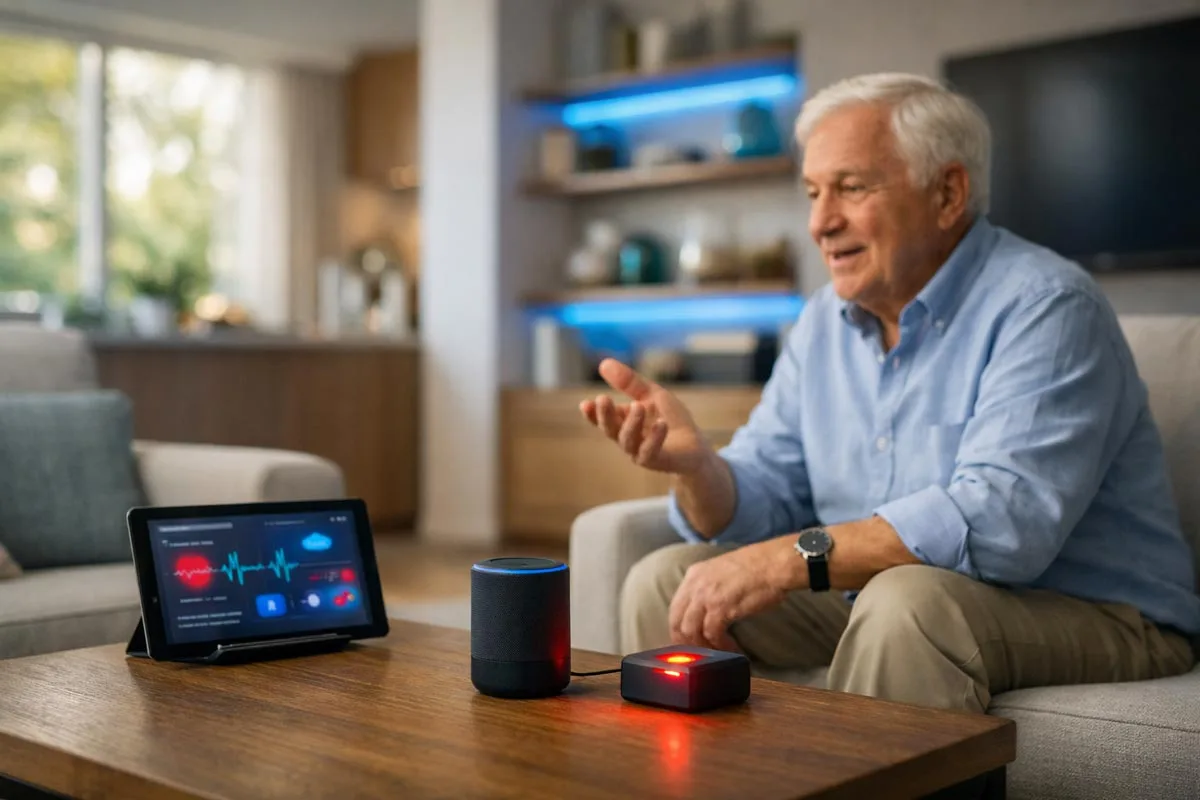
Smart home technology helps seniors live safely and independently with voice control and real-time health monitoring.
Table of contents
Show moreShow less- How Smart Home Technology Supports Independent Living
- Advanced Fall Prevention and Safety Monitoring
- Health Monitoring Systems: Proactive Senior Care at Home
- Smart Environmental Control and Hazard Detection
- Enhancing Connectivity and Reducing Social Isolation
- Ambient Assisted Living (AAL): The Future of Smart Homecare
- Emerging Trends in Assisted Living Technology
- Key Benefits of Smart Devices in Homecare
- Conclusion
- Frequently Asked Questions
The landscape of senior care is evolving rapidly. Today, technology in home care is no longer a luxury; it is a lifeline. Smart devices are transforming independent living for seniors by enhancing safety, improving health monitoring, and creating more comfortable, connected environments. From voice-controlled assistants to real-time health tracking systems, these innovations empower older adults to remain in their homes longer while giving families peace of mind.
As the demand for aging-in-place solutions grows, smart home technology is redefining assisted living. Let’s explore how these intelligent systems support independence, strengthen safety, and improve overall quality of life.
How Smart Home Technology Supports Independent Living
Independent living depends on three essential pillars: safety, accessibility, and convenience. Modern smart home devices address each of these needs through automation and intelligent monitoring.
Voice-activated assistants such as Amazon Alexa and Google Nest allow seniors to control lights, thermostats, and door locks using simple voice commands. For individuals with limited mobility or vision challenges, hands-free functionality removes physical barriers and reduces daily strain.
Smart thermostats automatically adjust indoor temperatures to maintain comfort while saving energy. Automated lighting systems illuminate hallways and bathrooms at night, significantly lowering fall risks. For more practical prevention strategies, see our guide on seasonal senior safety.
Smart plugs let you turn appliances off remotely, preventing accidents and improving household safety.
These technologies create a responsive home environment that adapts to the user instead of requiring the user to adjust to it.
Advanced Fall Prevention and Safety Monitoring
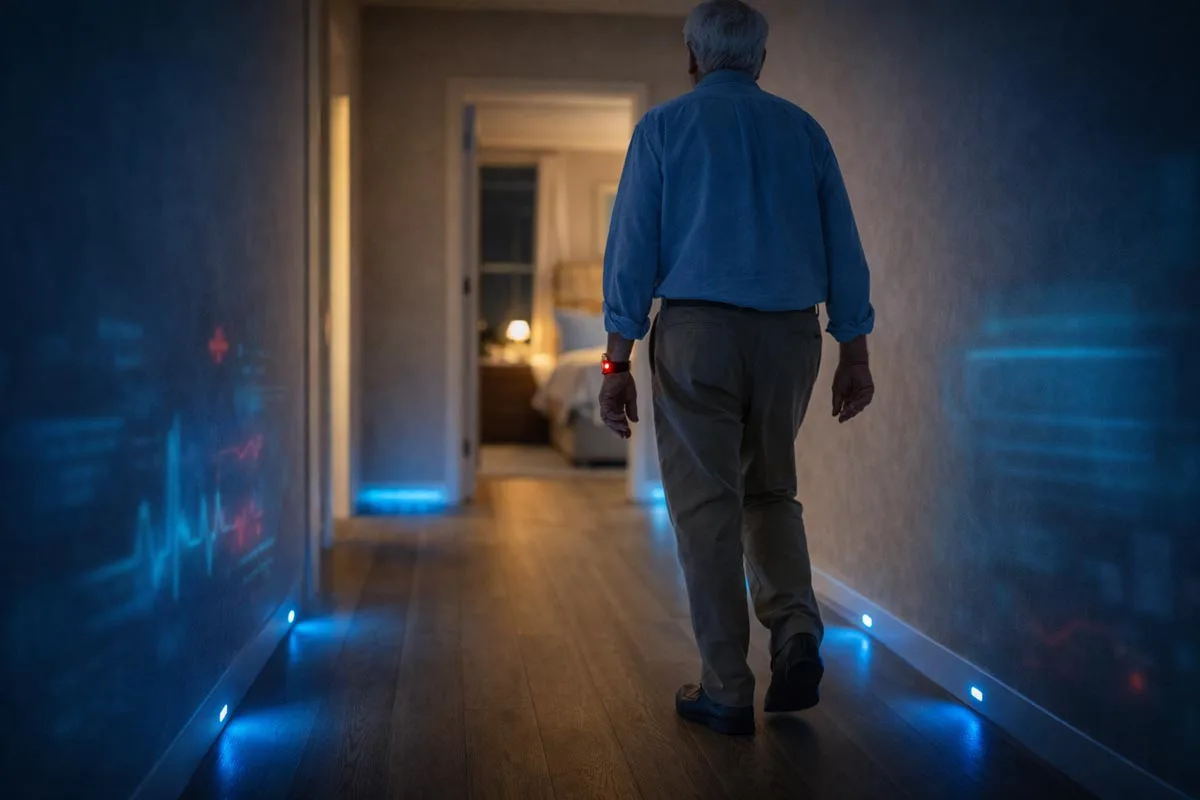
Motion-sensor lighting and wearable fall detection technology improve nighttime safety for seniors aging in place.
Falls remain one of the leading causes of injury among seniors. Smart safety devices now provide proactive solutions that dramatically reduce risk and improve emergency response times.
Motion-Sensor Lighting
Motion-activated lights automatically brighten pathways when movement is detected. This simple yet powerful innovation prevents nighttime accidents and increases confidence when navigating the home.
Fall Detection Technology
Modern wearable devices and wall-mounted radar sensors detect sudden changes in movement patterns. Solutions such as SafelyYou and CarePredict use artificial intelligence to recognize falls and immediately notify caregivers without compromising privacy.
Unlike traditional cameras, radar-based systems track motion without recording video, preserving dignity while ensuring safety.
Personal Emergency Response Systems (PERS)
Personal emergency response systems allow seniors to request help instantly. With a simple button press or through automatic fall detection, alerts are sent to family members or emergency services. These devices offer reassurance that assistance is always within reach.
Immediate access to support can significantly reduce injury severity and improve outcomes after a medical emergency.
Health Monitoring Systems: Proactive Senior Care at Home
Health monitoring technology has transformed the way caregivers manage chronic conditions and detect early warning signs.
Real-Time Vital Sign Tracking
Wearable Internet of Things (IoT) devices monitor heart rate, blood pressure, blood glucose, oxygen levels, and activity patterns. This data transmits securely to healthcare providers, enabling early intervention before issues escalate.
Remote health monitoring reduces hospital visits while maintaining close medical oversight. When combined with proper daily habits and guidance like our senior nutrition tips, outcomes improve even further.
Medication Management Solutions
Medication adherence is critical for senior health. Automated pill dispensers such as Hero and MedMinder release medication at scheduled times and send alerts if a dose is missed.
Family members receive notifications, allowing them to intervene promptly if needed. These systems reduce medication errors and promote consistency in treatment plans.
AI-Powered Health Assistants
Artificial intelligence enhances homecare by analyzing behavioral trends. If a senior’s activity levels drop or sleep patterns change, the system flags potential concerns. This predictive approach supports early detection and personalized care strategies.
By combining automation with intelligent data analysis, health monitoring systems strengthen independence without sacrificing safety.
Smart Environmental Control and Hazard Detection
Home automation extends beyond comfort and helps prevent accidents while safeguarding against hidden dangers.
Smart Thermostats and Automated Blinds
Temperature regulation becomes effortless with smart thermostats that adapt to user preferences. Automated blinds adjust throughout the day to optimize lighting and reduce glare, improving visual comfort.
Smoke, Gas, and Leak Detection
Connected sensors detect smoke, carbon monoxide, or gas leaks and send instant alerts to homeowners and caregivers. Rapid notification allows for immediate action, reducing potential harm.
Smart Doorbells and Home Security
Devices like Ring Video Doorbell and Google Nest Doorbell enable seniors to see and speak with visitors remotely. This reduces the risk of scams, unauthorized entry, and unwanted solicitation.
Enhanced home security creates a safer environment while preserving autonomy.
Enhancing Connectivity and Reducing Social Isolation
Independent living is not only about physical safety; it is also about emotional well-being. Technology bridges communication gaps and combats isolation.
Simplified Communication Tools
Modern tablets and smartphones feature larger icons and intuitive interfaces designed specifically for seniors. Video calling allows face-to-face interaction with family members, strengthening relationships despite physical distance.
Voice-Activated Communication
Voice assistants enable hands-free messaging, reminders, and calls. Seniors can ask for weather updates, news briefings, or schedule reminders with a simple command.
These tools foster engagement and create opportunities for consistent social connection.
Beyond technology, staying mentally and physically active is equally important. Explore ideas in our guide to wellness home activities to keep seniors engaged and energized.
Ambient Assisted Living (AAL): The Future of Smart Homecare
The integration of these technologies forms a broader concept known as Ambient Assisted Living (AAL). AAL combines smart home automation, wearable devices, and remote health monitoring to create a fully supportive living ecosystem.
Instead of relying on constant in-person supervision, seniors benefit from an intelligent network of devices working quietly in the background. Caregivers receive alerts only when necessary, preserving independence while ensuring oversight.
This model reduces caregiver stress and empowers seniors to live confidently in their own homes.
Emerging Trends in Assisted Living Technology
The future of assisted living will continue to evolve as artificial intelligence and telehealth advance.
Telehealth Integration
Virtual doctor visits allow seniors to consult healthcare providers without leaving home. Remote diagnostics and digital prescriptions streamline treatment and increase accessibility.
Personalized AI Care Plans
Artificial intelligence will soon tailor care plans based on real-time data and behavioral patterns. Personalized recommendations will enhance nutrition, exercise, and medication routines.
Wearable Wellness Technology
Wearables will track physical activity, sleep quality, and stress levels while encouraging healthier habits. These devices motivate seniors to stay active and engaged.
Predictive Analytics for Preventive Care
Data-driven insights will allow caregivers to anticipate potential health risks before they become emergencies. Preventive care will replace reactive treatment, improving long-term outcomes.
Key Benefits of Smart Devices in Homecare
- Reduce fall risks with automated lighting and motion sensors
- Provide immediate emergency response during medical events
- Track vital signs and medication adherence in real time
- Enhance security through smart monitoring systems
- Improve communication and reduce loneliness
- Promote independence without sacrificing safety
Conclusion
Technology in homecare is reshaping what independent living looks like. Smart devices do more than automate tasks; they protect, connect, and empower seniors to live with dignity.
By integrating voice assistants, fall detection systems, health monitoring tools, and connected security devices, families can create safer home environments that encourage autonomy. These innovations reduce the need for constant supervision while ensuring immediate support when necessary.
As smart home technology continues to evolve, it will redefine assisted living standards and make aging in place more accessible than ever before. The future of senior care is intelligent, proactive, and deeply human-centered, allowing independence and safety to coexist seamlessly.
At Supreme Homecare, we believe independence and safety go hand in hand, allowing seniors to live comfortably and confidently in their own homes.
As a trusted home care provider in Philadelphia, we continue to adopt innovative technologies that enhance the quality of care for both our clients and our caregivers. From improved communication tools to advanced care-monitoring solutions, we use modern technologies to deliver reliable, responsive, and compassionate support.
Our goal is simple. We provide personalized care that promotes dignity, independence, and peace of mind for families.
Have questions or want to learn more about our services?
Contact us today. We are here to help.
Frequently Asked Questions

At Supreme Homecare, our dedicated team of caregivers and home care professionals shares one goal: providing exceptional care at home. With experience, compassion, and skill, we support patients and families while continually training and educating our staff.
Our team members are more than employees. They are passionate advocates for health and well-being. By combining expertise with genuine kindness, we deliver care that makes a real difference.
Through the Supreme Homecare Blog, we share advice, stories, and insights to inspire and support caregivers and families. We are proud to lead the way in home care, and we are glad you are part of the Supreme Homecare family.
Have questions, concerns, or feedback? Contact us today. We would love to hear from you.