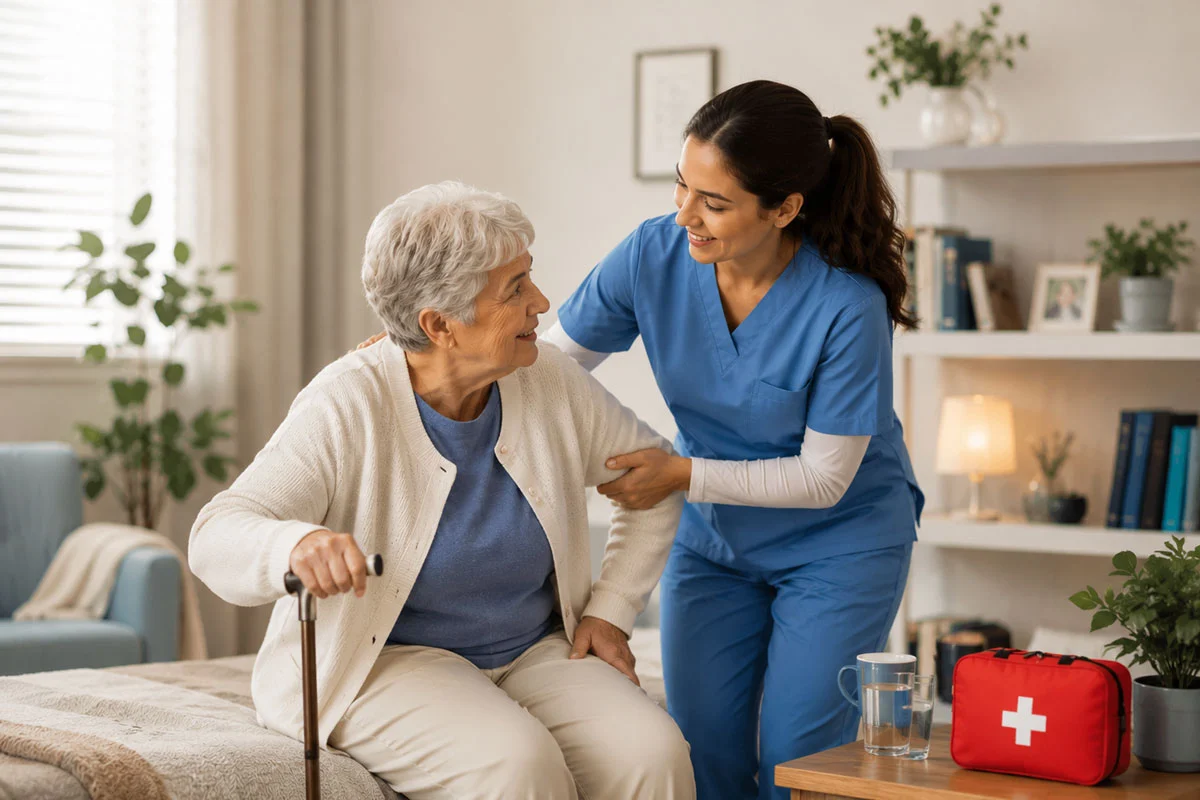
Professional in-home care can help seniors recover safely after a hospital stay with personalized support, medication assistance, and mobility care.
Table of contents
Show moreShow less- Why Recovery at Home Matters More Than Ever
- What Is Post-Hospital Home Care?
- The First 72 Hours After Discharge
- Benefits of Post-Hospital Home Care
- Essential Services Included in Post-Hospital Care
- How to Choose the Right Home Care Provider
- Cost, Insurance, and Medicare Coverage
- Conclusion
- Conclusion
- Frequently Asked Questions
Why Recovery at Home Matters More Than Ever
Walking out of a hospital can feel like crossing a finish line, doesn’t it? But the truth is, discharge isn’t the end of recovery. It’s often the start of its most fragile phase. This is where post-hospital home care becomes the bridge between clinical treatment and complete healing. Think of it like leaving the workshop before the final polish is done. The repairs may be complete, but the machine still needs testing, fine-tuning, and protection.
Healthcare systems are increasingly recognizing this. According to the Centers for Medicare & Medicaid Services (CMS), reducing hospital readmissions remains a national priority because avoidable readmissions are often tied to poor discharge coordination, medication confusion, or lack of support at home. That’s a huge deal because readmissions are expensive, stressful, and in many cases preventable.
And here’s where it gets interesting: home-based recovery programs are proving their worth. The American Medical Association reported a 44% reduction in readmission rates and a 35% shorter average hospital stay in home-centered care models. That’s not a small improvement. It’s a fundamental shift in how modern recovery works.
So what’s changing? People are healing where they sleep, eat, and feel safe. Recovery is becoming less institutional and more personal. And frankly, that changes everything.
The Shift From Hospital Beds to Home-Based Healing
Hospitals are built for acute care, not long-term healing. Once the emergency passes, the environment itself can become exhausting. Constant interruptions, unfamiliar routines, and limited personal comfort can make recovery harder than it needs to be. Home flips that equation. It offers familiarity, emotional security, and individualized pacing.
Picture recovery like planting a tree. The hospital stabilizes the roots, but home is the soil where it grows stronger. That environment matters more than people realize. At home, patients often sleep better, eat better, and experience lower stress levels. These aren’t just “nice extras.” They directly affect how quickly recovery happens.
There’s also a practical reason for this shift. Hospital overcrowding remains a growing concern, and healthcare systems need efficient transitions. Home care fills that gap by extending professional oversight without occupying hospital resources.
The biggest advantage? Personalized attention. In a hospital, a nurse may juggle several patients. At home, care becomes laser-focused. That’s powerful.
Current Readmission Statistics and What They Mean
Let’s talk numbers because they tell a story.
| Metric | Current Data |
|---|---|
| Average 30-day readmission for Medicare patients | Around 15% (NCBI) |
| Home recovery program readmission reduction | 44% (American Medical Association) |
| Patients without home health more likely to be readmitted | 35.6% more likely (CareJourney) |
| Patient satisfaction in home-based care | 90%+ (American Medical Association) |
These numbers show one thing clearly: what happens after discharge matters just as much as what happened during hospitalization.
Skipping structured post-hospital care is like driving away from the mechanic without tightening the lug nuts. Everything may look fine… until it isn’t.
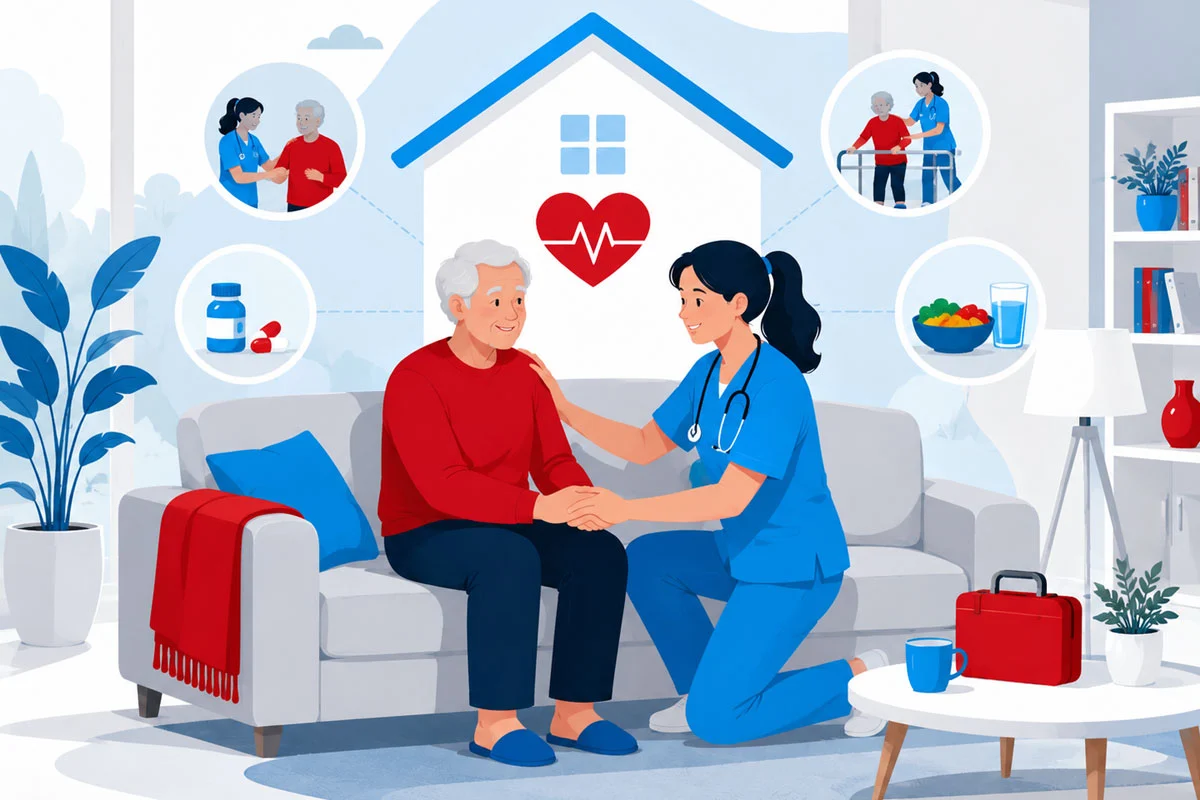
Post-hospital home care can improve recovery outcomes by providing personalized support, medication help, and daily assistance at home.
What Is Post-Hospital Home Care?
At its core, post-hospital home care is specialized support provided after discharge to help patients recover safely at home. It can range from skilled medical services to daily living support. The goal isn’t just comfort. It’s continuity of care.
Recovery often involves moving parts: medications, wound care, therapy exercises, dietary changes, mobility restrictions, and follow-ups. That’s a lot for one person or even an entire family to manage alone.
This care acts like an air traffic controller, coordinating every piece so nothing crashes.
For seniors, surgical patients, stroke survivors, and people with chronic illnesses, this structure can make the difference between recovery and relapse.
Medical vs Non-Medical Home Care
Not all home care looks the same.
Medical home care includes:
- Skilled nursing
- Wound care
- IV therapy
- Physical therapy
- Occupational therapy
- Medication management
Non-medical home care includes:
- Bathing assistance
- Dressing
- Meal prep
- Light housekeeping
- Transportation
- Companionship
Here’s the simple way to think about it:
Medical care heals the body. Non-medical care protects the recovery.
You often need both.
Imagine someone recovering from hip surgery. A nurse checks the incision. A therapist works on mobility. A caregiver helps with showering and meals. Remove one of those pieces, and the whole recovery system weakens.
That’s why layered care works so well.
Who Typically Needs It?
Not every patient needs structured home care, but many do.
The most common candidates include:
- Seniors after hospitalization
- Post-surgery patients
- Stroke survivors
- Heart failure patients
- COPD patients
- People with mobility limitations
- Patients with multiple medications
- Individuals living alone
Risk increases when someone has a chronic illness plus weak support at home. It’s like trying to rebuild a house during a storm. Possible? Sure. Easy? Not at all.
That’s where professional help changes the game.
The First 72 Hours After Discharge
If recovery had a danger zone, this would be it.
The first 72 hours after hospital discharge are when complications often begin to develop. Medication errors, dehydration, falls, and confusion happen fast. Families are often overwhelmed. The patient is tired. Instructions get lost.
This period is like the first few minutes after takeoff. Small problems can escalate quickly if they’re not caught early.
Research consistently shows that early home health intervention improves outcomes. Timing matters.
The earlier support starts, the smoother the recovery runway.
Why This Window Is Critical
This is when reality hits.
At the hospital, someone checks vitals. At home? That responsibility shifts instantly.
Symptoms can change fast:
- Swelling increases
- Breathing worsens
- Pain spikes
- Appetite drops
- Confusion starts
Without trained eyes catching those warning signs, patients can spiral.
That’s why early nurse visits, medication reviews, and safety assessments are so valuable.
Common Mistakes Families Make
Even with good intentions, families often:
- Skip medication timing
- Miss follow-up appointments
- Ignore subtle symptoms
- Push mobility too quickly
- Underestimate fatigue
Recovery isn’t a sprint. It’s more like rebuilding after a storm, one step at a time.
Patience wins.
Benefits of Post-Hospital Home Care
Faster Physical Recovery
Healing at home often accelerates because routines are more natural. Patients sleep in their own beds, eat familiar meals, and move at their own pace.
Stress drops. Comfort rises.
That matters.
Cortisol, the stress hormone, directly affects inflammation and healing. Lower stress means better repair.
Simple.
Lower Risk of Readmission
Readmission prevention is one of the strongest benefits.
Amedisys reports that patients receiving home health care had a 60% lower risk of readmission in one study.
That’s massive.
Why? Because someone is watching.
Tiny warning signs become early interventions instead of emergency admissions.
Better Medication Compliance
Medication errors are among the biggest post-discharge risks.
Wrong dose. Wrong time. Missed refill.
Home nurses help organize medications, explain side effects, and keep treatment on track.
It’s like having a GPS for recovery instead of driving blind.
Emotional and Mental Stability
Healing isn’t only physical.
Hospital stays can leave people anxious, disoriented, or even depressed. Being home restores normalcy.
Familiar smells. Familiar faces. Familiar routines.
That emotional grounding can stabilize cognition, improve motivation, and support better outcomes.
Especially for seniors.
Essential Services Included in Post-Hospital Care
Skilled Nursing
Skilled nurses are the frontline defense.
They monitor vitals, manage wounds, assess symptoms, and communicate with physicians.
They catch problems before they explode.
Think of them as the early warning radar.
Physical Therapy
Recovery without movement is incomplete.
PT helps rebuild strength, balance, and mobility.
Whether it’s walking after surgery or regaining function after a stroke, therapy prevents setbacks.
Progress may feel slow, but it builds over time.
Like interest.
Personal Care Assistance
Bathing. Dressing. Toileting.
These tasks sound simple until recovery makes them difficult.
Personal care protects dignity while reducing the risk of injury.
It’s practical support with human value.
Meal Preparation and Nutrition Support
Food is fuel.
Poor nutrition slows healing. Dehydration weakens recovery.
Home caregivers help keep meals balanced, medications properly timed with meals, and hydration consistent.
It sounds basic.
It isn’t.
It’s foundational.
How to Choose the Right Home Care Provider
Choosing a provider isn’t just about availability. It’s about fit.
Ask:
| Question | Why It Matters |
|---|---|
| Are caregivers licensed? | Ensures compliance |
| Do they offer 24/7 support? | Emergencies happen |
| How fast can care start? | Timing matters |
| Is there a care plan? | Structure prevents gaps |
| Do they coordinate with doctors? | Continuity matters |
A strong provider feels less like hiring help and more like building a recovery team.
That’s the standard.
Questions to Ask Before Hiring
Before signing anything:
- How do you handle emergencies?
- Who supervises caregivers?
- What’s included in the plan?
- Can care scale if needs increase?
- Do you provide specialized recovery support?
If they can’t answer clearly, keep looking.
Clarity matters.
Cost, Insurance, and Medicare Coverage
Cost is often the first concern.
The good news? Medicare often covers skilled home health services when medically necessary. That can include nursing, therapy, and limited aide support.
Non-medical care usually falls outside standard Medicare coverage.
Private insurance varies.
Long-term care insurance can help.
And while out-of-pocket care may feel expensive upfront, compare it to hospital readmission costs, lost wages, and caregiver burnout.
Sometimes prevention costs less than a crisis.
Actually, often.
Conclusion
Conclusion
Recovery doesn’t end at discharge. That’s the biggest misconception in healthcare.
Hospitals stabilize. Home care strengthens.
And when done right, post-hospital home care becomes the difference between “getting by” and truly healing. It reduces readmission risk, improves comfort, speeds recovery, and gives families breathing room.
The smartest recovery plans don’t ask, “Is home care necessary?”
They ask:
How can we recover without it?
That’s the better question.